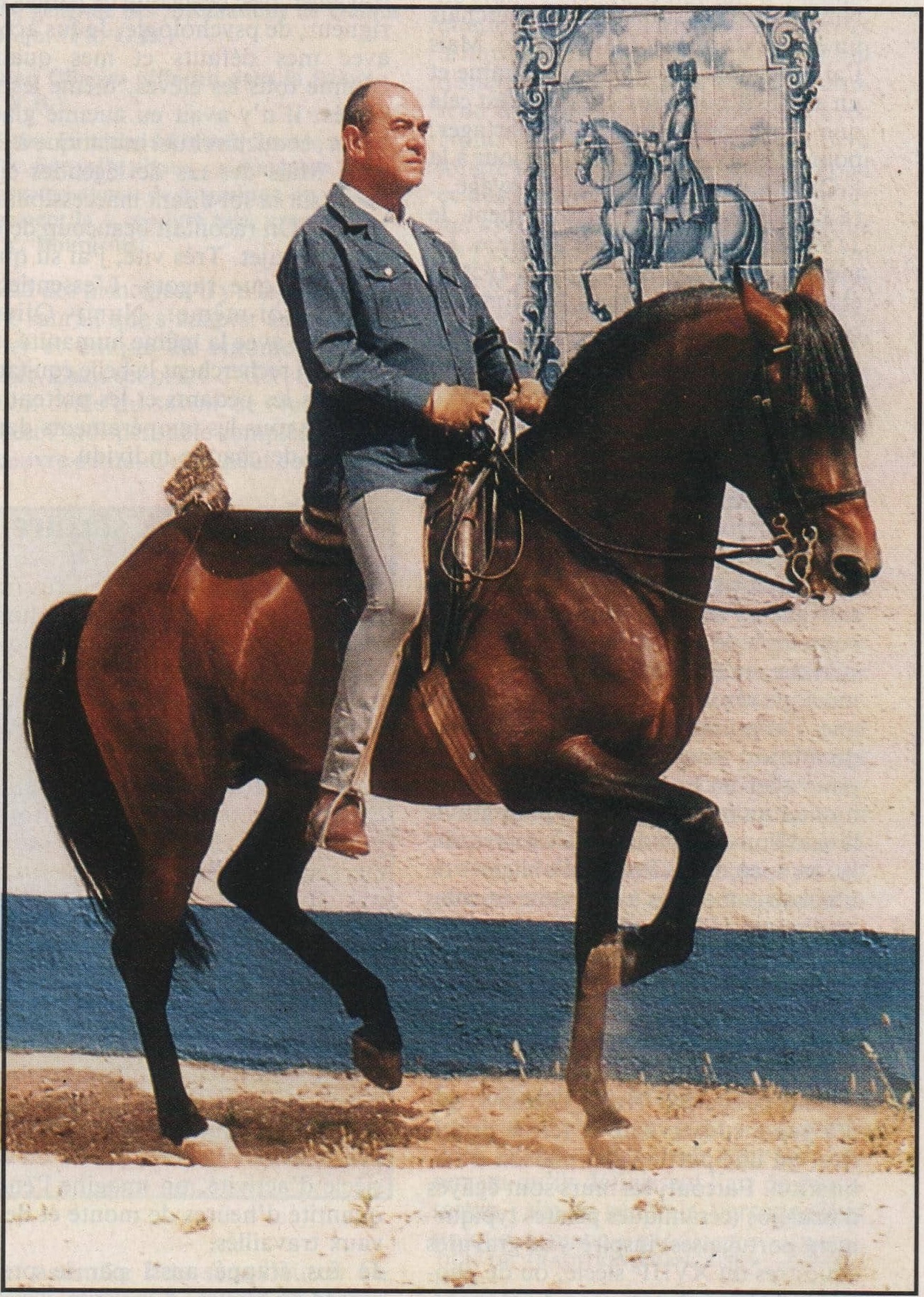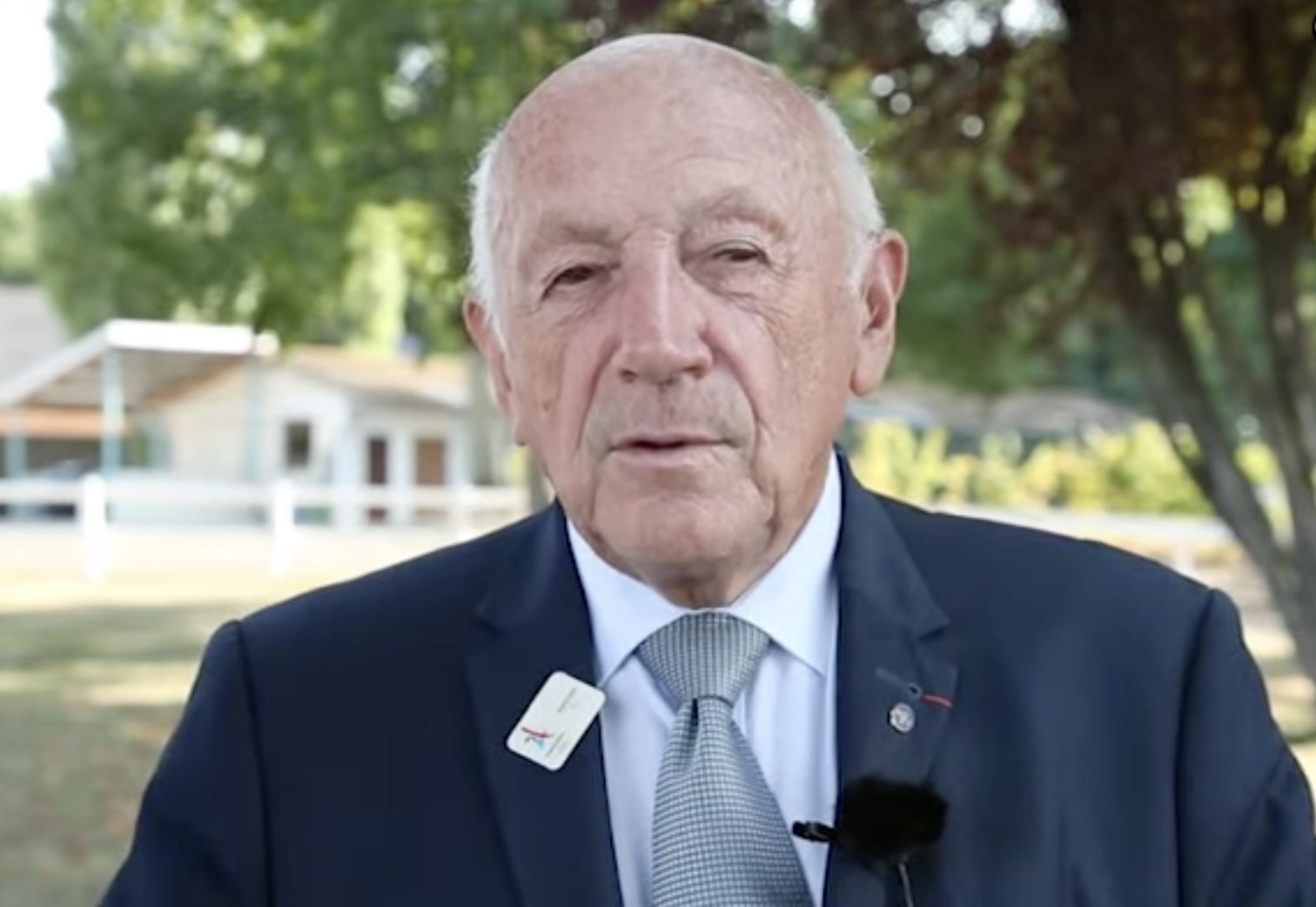
François Lucas, portrait
François Lucas? If you've been involved in horse riding since the last century, you've surely heard of him at one time or another...
As a competitor, he didn't do things by halves: French eventing champion in 1967. As a teacher, he ran the Saint-Germain-en-Laye club with a masterful hand for decades. As a dressage judge, he judged at the Olympic Games in Los Angeles, Seoul and Barcelona. In the service of his passion, enthusiasts and their development, he contributed to the creation of the Poney Club de France and the development of the Fédération Française d'Équitation (FFE), and was for many years President of the CREIF (the powerful Ile de France equestrian league), the FIVAL and the UNIC (socio-professional organisations in the sector).
In recent years, he championed and secured the Château de Versailles' bid to host the equestrian events at the 2024 Olympic Games in Paris.
All this without sacrificing, every winter – and again this season – at the age of 82 (on 16 April), a few hunts and other pursuits, notably with the Rallye Bonnelles in the Rambouillet Forest.
With the dogs about to return to the kennels for the summer, there are plenty of good reasons to ask him what the Vénerie means for horses and/or riders.
X.L. - François, we saw you back in the saddle during this hunting season, alongside Véronique Nadjahi, master of the Rallye Bonnelles hunt. What keeps you going? The deer? The dogs? The horse? The forest? The hunt? In order, please?
F.L. - You're asking me what keeps me going? Well, thanks to the Horse (I capitalise it!), I chase everything: the deer, the dogs, in the forest with the crew. The horse has the extraordinary quality of being extremely versatile. I tell anyone who will listen that encountering the horse in life is a stroke of luck. What else can I say? That in nature, on horseback, quite simply, you feel good! Happy!
X.L. – A word about each of these ‘components’ of the painting?
F.L. - The stag is a fascinating animal of great nobility. It moves with great lightness. Galloping behind the dogs as they freely pursue the Stag (I still capitalise it!) they have chosen to chase is a superb spectacle in which we are participants. The dogs have the particularity of maintaining the stag's survival instinct. That is, to flee. In hunting with hounds, the dogs must track down the deer and outwit the wild animals' tricks. It is fascinating to watch, in all circumstances. In this context of letting the hounds run free, the dogs in the pack express themselves naturally and instinctively. I am convinced that they experience real well-being . I find this incomparable to the spectacle of many city dwellers walking their dogs on a two-metre leash along the kerb before returning to their flats. Hounds also have the ability to disperse wild animals, thus preventing large groups from forming, which can lead to inbreeding, contagious diseases, and damage to forests and agriculture.
X.L. – So the horse acts as a “ link’ ” between all the other equestrian activities you have practised? More specifically?
F.L. - The horse is a vehicle that allows city dwellers to find or maintain contact with nature and the animal world. Its multifaceted use leads me to use a culinary metaphor, to say that the horse is to sport what the egg is to cooking. Hunting with hounds is somewhat reminiscent of eventing in its old form, which originated in the Championnat du cheval d'armes, a competition reserved for officers before the Second World War, when there were routiers, a steeplechase before the cross-country event. These were events covering approximately twenty-five kilometres. This notion of endurance is very interesting because it allows you to gauge the horse's capacity for rational use and to learn, in advance, how to prepare it.
X.L. - It is often said that huntsmen are poor riders; that they use horses without much finesse... True or false?
F.L. - It is easy to caricature hunters by taking bad examples. Bad examples can be found everywhere. But I have noticed that since the French Hunting Horse Championship was established, there has been a marked improvement in the preparation of horses and the way they are ridden. In addition, the Société de Vénerie organises advanced training courses several times a year to this end. What may have been true in the past is no longer the case today, in my opinion.
The Bonnelles hunting team hunts with dogs of a specific breed, known as the ‘Grand Anglo Français tricolore’.
X.L. - What about the horses? What qualities and skills are sought after?
F.L. - Yes, the Bonnelles/Rambouillet Rally hunts with Anglo-French tricolours, which have a good nose and are fast. These two qualities, olfactory and speed, are invaluable. The horses are French trotters and saddle horses. The skills sought are calmness, stamina and, as the riders sometimes have to spend long hours in the saddle, comfort. And this is where, as in all other equestrian practices, preparation and training come into play, which can and must be done before the hunting season, which must follow the necessary rest period at the end of the previous season. A hunting horse needs to be maintained and prepared.
X.L. – Why – and is this still true? – Is the retired trotter the most sought-after mount among hunting teams?
F.L. - The trotter does indeed have special qualities because it is naturally physically strong, energetic and resilient. Mentally, it is upright and willing. It easily gets used to hunting, its rituals and the horn!
X.L. - What about a thoroughbred? An Anglo-Arabian? Or another breed?
F.L. - I have hunted with thoroughbreds and Anglo-Arabians. There is no particular breed that is best suited to hunting. Training and conditioning are what matter most.
X.L. – Is hunting with hounds good for a horse? In what way?
F.L. - Hunting is excellent for horses. They learn to go anywhere and get used to all kinds of noises and movements. They become horses that can be ridden without any “ instructions ” practical and versatile and friendly. I am inclined to think that selective breeding for a particular discipline could tend to become a “ disability ” .
X.L. - Who were your best hunting horses? Any specific memories?
F.L. - I don't have any particular memory of one horse giving me more satisfaction than another. I always try to take the time to make them pleasant, which, I admit, requires satisfying the horse's training needs first, to the detriment of the simple pleasure of hunting. Let me explain: because horses sometimes tend to get ‘hot’ or even nervous during the day, either because they are going fast or, conversely, because we are marking time while the pack finds the trail again and sets off, and they become impatient. So you have to take it upon yourself to move away from the heart of the hunt.
X.L. - What about reading? What are your favourite books on hunting and hunting horses?
F.L. - There is a wealth of reading material available, and the more you read, the more you realise how little you know. Most recently, I read the memoirs of the Duchess of Uzès, who spent her life hunting with hounds. In 1924, she formed the Rallye Bonnelles Rambouillet hunting team into a non-profit association under the 1901 law. That shows how visionary and modern she was. It is a fascinating story. She was the master of the hunt. She also served as a wolf hunter and hunted on horseback until the age of 86, the year of her death. Her career is an example that goes far beyond horse riding and hunting.
Interview by Xavier Libbrecht
Many books have been written, throughout the ages, about the hunting horse, which has often been associated with the outdoor, service or war horse. A bibliography on this subject is available here.