An Italian-style colloquium
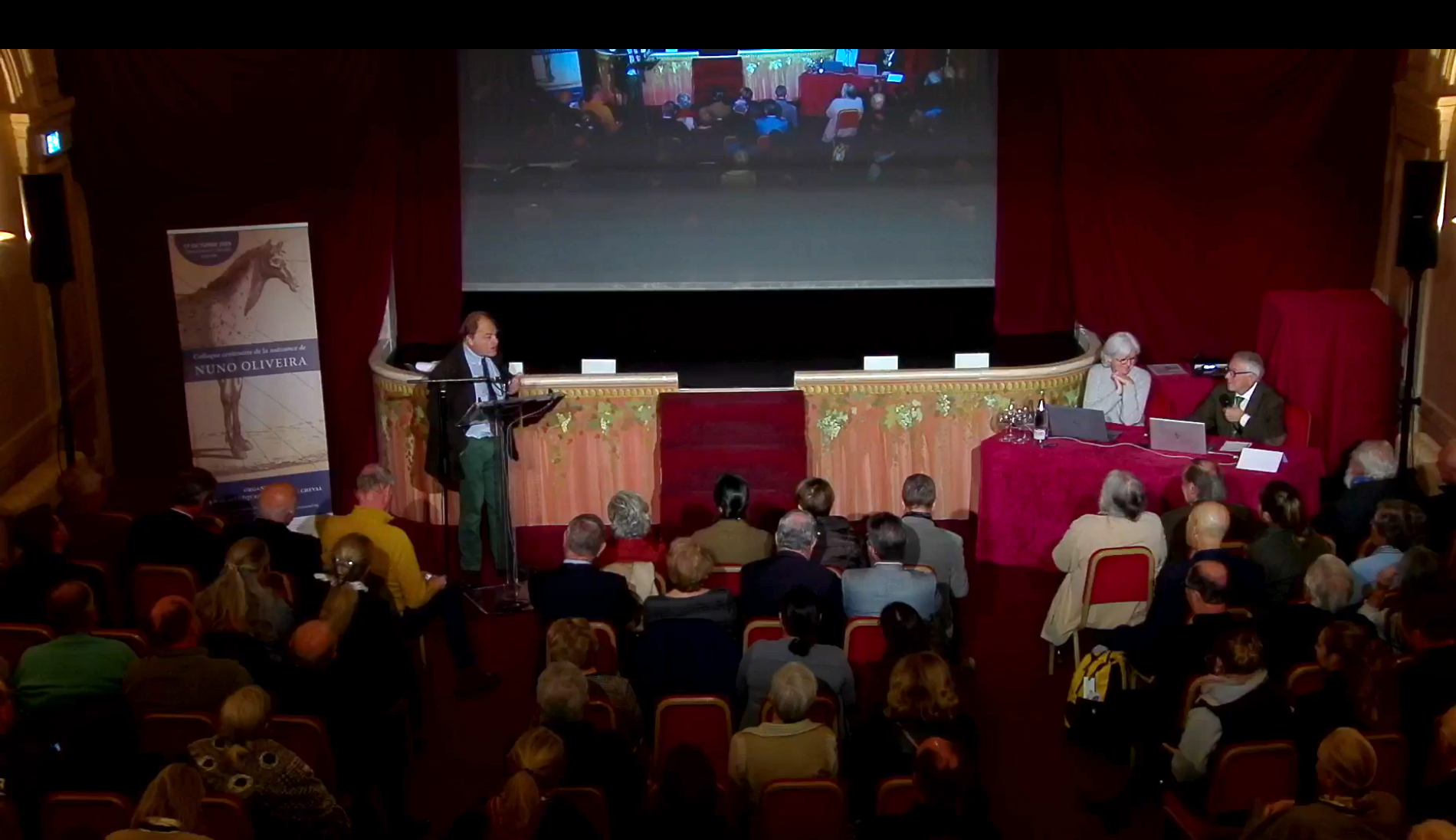
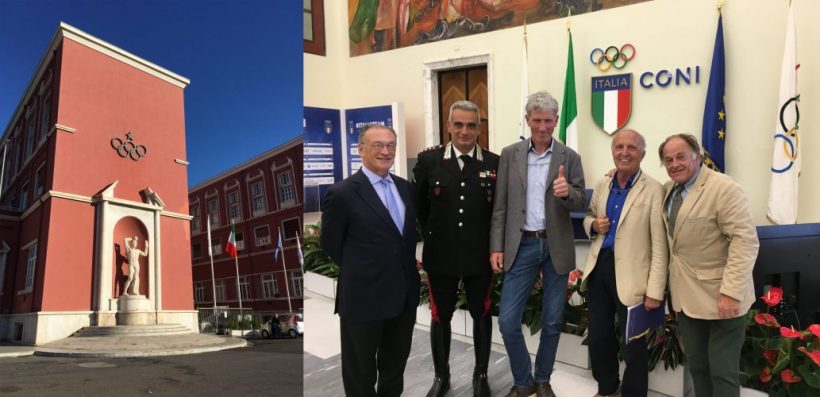
"Kidnapped", "in the stride", "lightly", these were the expressions heard at the end of the colloquium organised by the Bibliothèque Mondiale du cheval, thanks to the support of the Italian Equestrian Federation (FISE) and the Italian National Olympic Committee (CONI).
All this in a kind of good humour likely to compensate for any other hazards; in short, in the image of what was at the heart of the various interventions of the day, this Monday 19 September, the day after the World Eventing Championship in Pratoni del Vivaro, a high place of application of this equestrianism.
Yes, the so-called Latin horsemanship, in search of and in the service of the "well-being of the horse", which has been claimed and applied since the Renaissance and over the centuries and evolutions by the descendants of the squires of the two neighbouring countries. A quest, a state of mind, a style, a school?
Suffice it to say, at the end of the long and well-documented speech by Alain Francqueville, President of the French Mission for Equestrian Culture, that modern world horsemanship practiced by the followers of the three Olympic disciplines (dressage, show jumping and eventing) is as much inspired by it as the regulatory power. He will point out that the International Equestrian Federation (FEI) has endeavoured over the century to meet the demands of an increasingly demanding civil society on these ethical and animal welfare issues.
Does it do it perfectly? There was quite a lively debate on this issue in the speech that followed.
Ludger Beerbaum, a German champion with a track record that is difficult to match at the end of a career spanning forty years, responded to the organisers' invitation and answered some of the questions asked, in particular concerning the evolution of the Olympic format in show jumping. A "live" part of the colloquium, at the end of the morning, where international riders Laura Kraut, Kevin Staut and Michel Robert also spoke with seriousness and sincerity, thus testifying, on behalf of all the socio-professionals in the sector, to their involvement on this subject.
Giovanni Battista Tomassini, journalist at RAI, passionate about equestrian culture, rider and follower of Portuguese dressage riding, author of a kind of history of Italian squires of the Renaissance whose title is "Le opere della cavalleria" painted a remarkable portrait of Italian society and its evolutions in the fifteenth century which, in full turmoil after the so-called medieval period, had a need to express itself, to renew itself in all its components. The horse being essential to the life of man in those times, it was obvious that its use, the way it was looked at at the time, would also change... Mature. It was a nice gallop from Grisoné to Mazzucchelli passing of course Corte, Ferraro, Pignatelli.
At the end of this fresco, in the wake of this, Professor Mario Genero, who is part of the panel of experts of the World Library of the Horse, revealed to us the content of a nugget found of which he has the secret, a letter in Latin, a kind of biblical simplicity in praise to the horse and to those who serve it, written by Pope Pius II that you can read by following the link below. A short, clear presentation, where each comment full of restraint was measured, so that the essential would appear and no longer escape us.
Mario Genero did not leave the lectern and then whetted our appetite with the planned and promised contribution of Patrizzia Arquint, a university researcher who was supposed to close this conference - but had to be excused - and of which he was therefore the depositary.
So these were just a few words about Tomasone Arcamone and his speech that you can find here.
We will not have said everything about this Roman colloquy if we did not mention the speeches of Mauro Checcoli, without whom this Roman meeting would not have taken place. A remarkable rider, Olympic champion in Tokyo in 1964 (team and individual gold) at the age of 22, Mauro, who still rides horses at eighty, testified tirelessly throughout the day to his admiration for Federico Caprilli, the "founder" of forward riding and of the modern position of show jumping, which little by little, after having made a school at Pinerolo (Turin), and at Tor di Quinto (Rome), to then seduce the squires of the Cadre Noir at Saumur, became universal
At the end of the speeches of two colonels of the famous Carabineri regiments who attended the conference, Mauro Checcol, who had considered them to be so many "provocations", launched into a packed and flamboyant style that won over all the ranks of the assembly, in a vibrant tribute to Federico Caprilli and his masters who relayed its precepts. Unforgettable.